Works Layers
Define completed or planned works
A Works Layer defines any works that have been (or are planned to be) performed, which Horizons doesn't otherwise know about! This makes it possible to update the condition of your assets in the absence of newer survey data. It requires you to import a CSV file containing data related to the works, including date, start/end chainages and XSP code.

By incorporating a Works Layer into a Treatment Set, Horizons can use the data to identify Sections that have been (or will be) worked on and perform extra steps when analysing them. For each affected Section, it will:
-
calculate the deterioration of the Section's Condition Parameters more accurately
-
ignore triggered Treatments tagged as Major to avoid conflicts with planned works in any year
-
ignore triggered Treatments tagged as Minor to avoid conflicts with planned works in the current year only
When creating or editing a Treatment Set, you have the option of specifying a Works Layer in the 1 Details section.
If the Treatment Set has XSP Merging enabled, major/minor Treatments will be ignored even if the works occur in a separate XSP code (e.g. road lane).
Import the data
Before you can create a Works Layer, you must import its data:
-
In the Management module, click the top Data Import icon, and then select Import Data at the bottom of the dropdown.
-
Enter a unique name for the new data source. Choose the Network it contains data for. Click OK to continue.
-
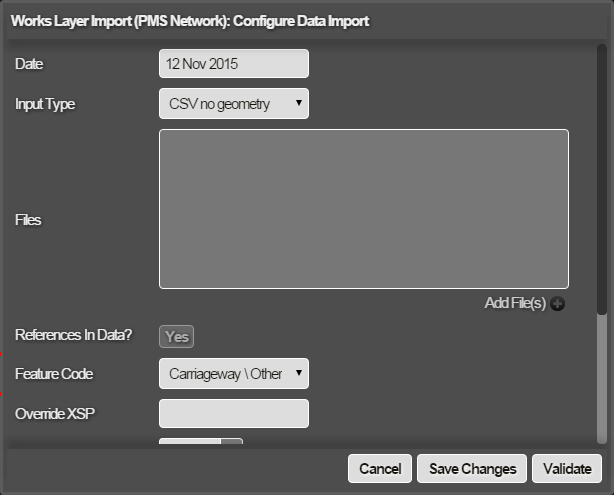
In the Configure Data Import window, fill in the following fields:
-
Date - defaults to today's date. Change this to another date (e.g, survey date, works completion date) as needed.
-
Input Type - choose CSV no geometry.
-
Feature Code - choose the type of asset that your planned/completed works apply to. If not specified, it will default to Carriageway (CW).
-
-
Click Add File(s). Select one or more CSV files on your device containing the planned/completed works data. When the upload is finished, click Close.
-
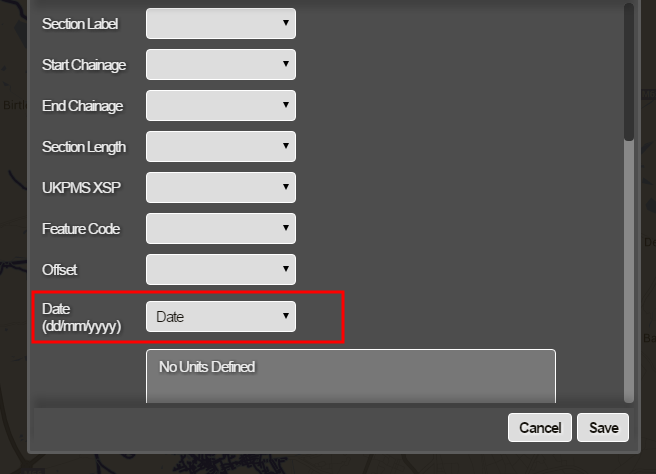
In the Configure Fields window, map the Date field to the relevant column in your uploaded file. This is crucial for deterioration to be calculated correctly during Analysis! If not specified, every Treatment date will default to the Date specified in step 3.
Map the remaining fields to the relevant columns in your file as required. Click Save to finish. See Configuring Data Import Fields.
-
Fill in the remaining fields according to your requirements. See Configuring Data Import.
Create a Works Layer
Once your data has been imported, you can create a Layer that uses it as a data source:
-
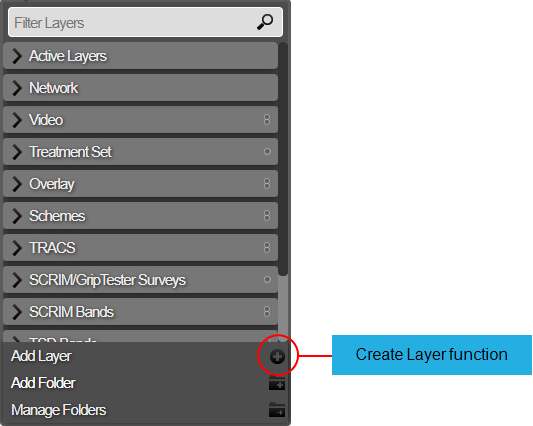
In the Explorer module, click the top Layers icon, and then select Add Layer at the bottom of the dropdown.
-
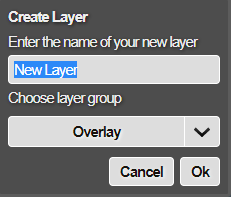
Enter a unique name for the new Layer, based on the data it will represent. Choose the Layer Group folder it will belong to. Click OK to continue.
-
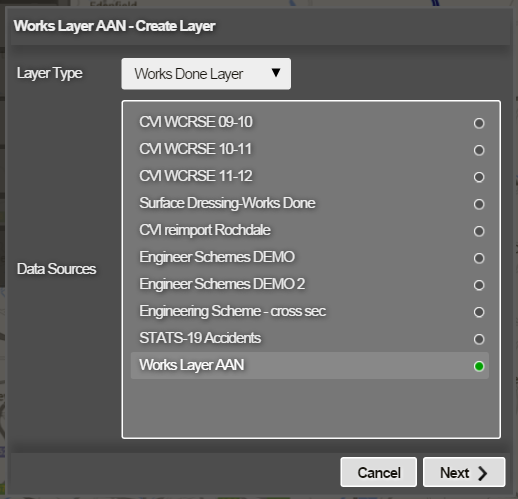
In the Create Layer window, click the Layer Type box and choose Works Done Layer. Select your imported data source in the list and then select Next.
-
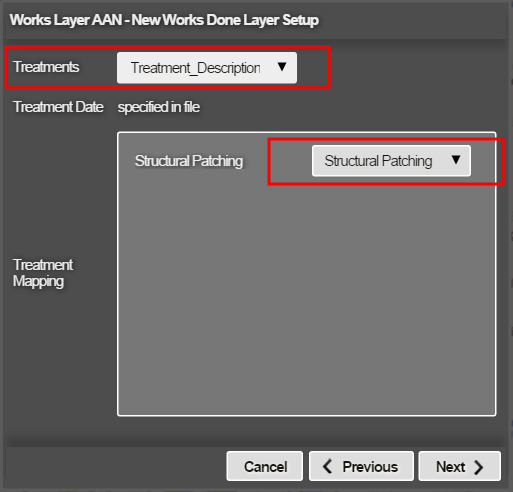
In the next window, click the Treatments field and choose the column in your imported data source that contains the Treatment Description.
For every column value that appears in the Treatment Mapping box, choose the corresponding Treatment that has been defined in Horizons. Select Next to continue.
-
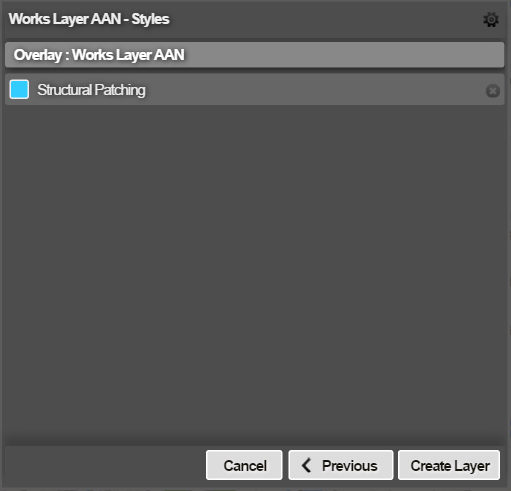
A Layer Style is automatically created for every Treatment in your imported data source. Select one to customise is appearance. Select Create Layer to finish.
Use a Works Layer
When creating or editing a Treatment Set, you have the option of specifying a Works Layer in the 1 Details section. This can significantly improve deterioration calculation and avoid Treatments that could clash with the planned/completed works.
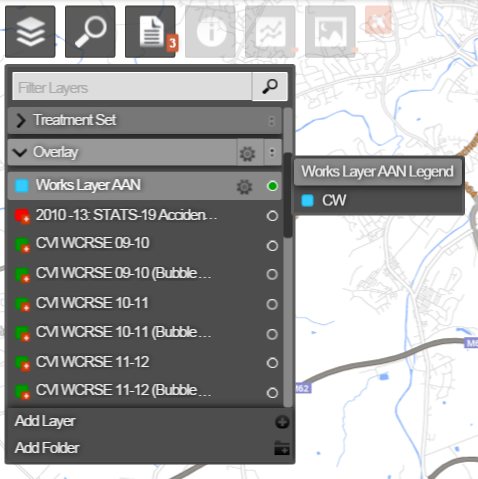
To visualise a Works Layer on the map, click the top Layers icon and select it in the dropdown. To learn more, see Active Layers.